
Richard Russell has philosophy degrees from Aberystwyth University (1965) and McMaster University, Ontario (1967).
He has an MA in sociology of religion (1973) and a PGCE (1974) and an M.Ed. (1976) from Bristol University. Also a DipHE (Theol) from Trinity College Bristol. Also qualified as an RAF marksman, glider pilot, and scuba diver for balance!
He has lectured in philosophy at Harris-Manchester College (Oxford) and Trinity Christian University (Chicago); and part-time with Bristol University and Trinity College (Bristol) when he was Vicar of Widcombe in Bath. Now lives between Bath and Wells at Radstock in Somerset in busy retirement.

Richard has, over several decades, been drawing and sharing numerous diagrams to illustrate Reformational philosophy.
For the first time, they have been collected together in this volume.
Richard A. Russell, 2020. Christian Philosophy Diagrams. Bristol: All of Life Redeemed.
MA Thesis (Bristol University)
Richard Russell MA (1973) The growing crisis of the evangelical worldview and its resolutions
MA Thesis (McMaster University, 1967)
Examination of Religious Groundmotives
MEd thesis (Bristol University, 1976)
Richard Russell MEd on the relations between reason and commitment
Articles
2025. Kierkegaard, Subjectivity, and Truth. Findings 8: 53–63.
2024. Is Karl Barth’s Christocentrism a valid Christian way of theological thinking? Findings 6 (March 2024): 7–29.
2002. Biblical foundations for philosophy (original 1967). Biblical Creation Society.
1991. In defence of Dooyeweerd Spectrum 23 (2) (1991):147-59
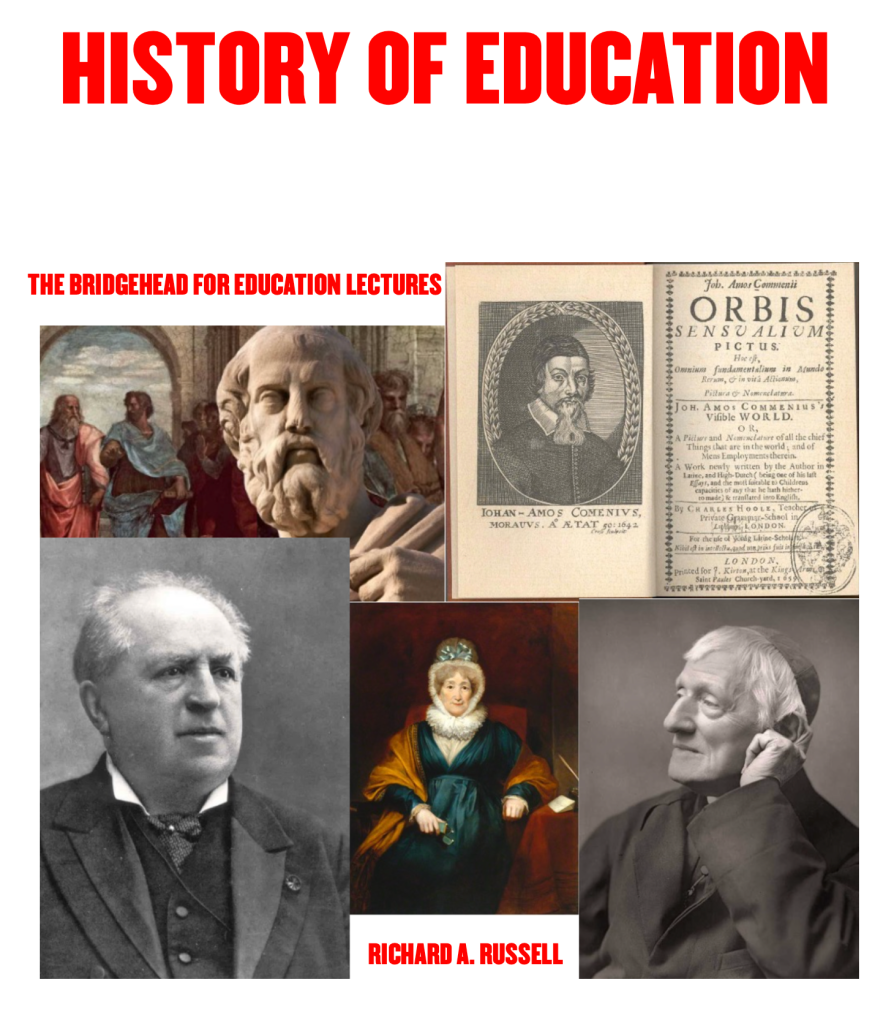
1991 A history of education – explicitly and implicitly looking at sociology, philosophy and education theory in a historical context . Lecture notes taken from A Bridgehead for Education, 1991
1986. Natural theology: is it scriptural? Anakainosis 8(3) March: 6-8
Where is Francis Schaeffer going? Vanguard
1981. Going round the prickly pear of British education (Interview) Vanguard 11(5) Sept-Oct: 16-17
1981. Philosophy and sociology. In De Santo, C.P., Redekop, C., and Smith-Hinds, W. eds. A Reader in Sociology: Christian Perspectives. Scottdale: Herald Press, pp. 253-
1970 Review of Francis Schaeffer’s Escape to Reason. International Reformed Bulletin 13 (no 43) (Fall 1970)23-26
No date. Science, philosophy of science and science education.
Creation and conservation. Biblical Creation 5(15): 65-75; 5(16): 118-125
SELECTED Diagrams – from Richard A. Russell, 2020. Christian Philosophy Diagrams. Bristol: All of Life Redeemed.


